
AI Researchers Got 85x More Efficient and Invented Nothing
TasteVal finds AI experimental taste doubling every 3 months since Dec 2025. The same paper labeled 2,000+ model experiments and found zero invented ideas.

TasteVal finds AI experimental taste doubling every 3 months since Dec 2025. The same paper labeled 2,000+ model experiments and found zero invented ideas.

OpenAI’s Sep 30 writeup shows protected reasoning was extracted without breaking encryption: by replaying encrypted CoT across chats until it surfaced in the clear.

FTA freezes failed tool observations before generation. Across six models and 3,600 human-annotated responses, false-success falls from 22.8% baseline to 0.8% with a structured evidence contract, while useful responses rise from 74.9% to 98.8%.

Anthropic's Project Swap put Claude agents into a book barter market. Live efficiency hit ~0.55 vs a ~0.89 optimum; ~85% of the shortfall was preference representation, not the trading floor.
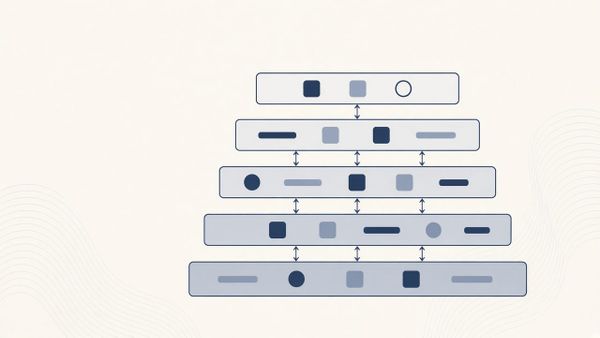
Salesforce AI Research’s ten-day agent campaign argues continual operation without forgetting is a harness problem, before continual learning can even start.

Anthropic's Claude sped up 30+ biomolecular models ~4× and cut binder-campaign GPU cost by ~100×. The kernels are the story.
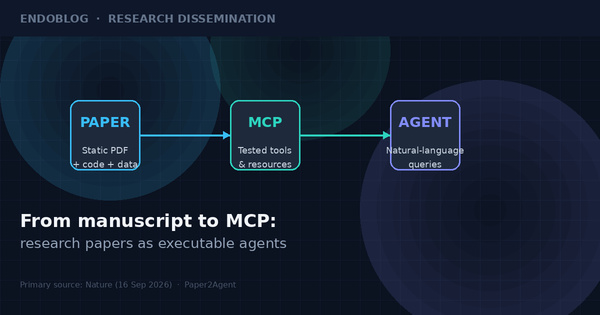
Nature’s Paper2Agent converts papers and code into tested MCP servers that act like virtual corresponding authors.

By Venkata Anirudh Devireddy · Endoblog.dev For over a decade, people who wanted to get into the tech industry were told the best way to do so was to learn to code. This was sound advice back then when coding was the bottleneck in creating software. However, that bottleneck is
By Venkata Anirudh Devireddy · Endoblog.dev They're used interchangeably a lot, but they shouldn't be. The difference between an agent and an assistant tells you about what kind of actions it can perform. An assistant responds. An agent acts. Assistants just respond to your questions. If

By Venkata Anirudh Devireddy · Endoblog.dev There used to be a clear line between the best closed models and the best open weight models. However, the gap between these two categories is starting to shrink, which is something every AI developer should be aware of. What "open weight"

By Venkata Anirudh Devireddy · Endoblog.dev AI browsers went from a novelty to something several companies in the industry are shipping this year alone. So worth understanding what they can do for you. The basic idea of AI browsers is that the browser will show you the website you want

People often say that artificial intelligence killed entry-level developer jobs. While this is true to a certain extent, it's not the complete picture. The numbers For developers between the ages of 22 and 25, there has been a near 20% decrease in the number of available jobs

By Venkata Anirudh Devireddy · Endoblog.dev I've sent over fifty cold emails to professors and startup founders. Most got ignored. Some got replies. A few turned into actual research affiliations. Here is what separated the two groups. Read something they wrote first Most emails to professors read the
By Venkata Anirudh Devireddy · Endoblog.dev Every student has had the same moment. You write something yourself, run it through Turnitin out of paranoia, and it comes back flagged as partially AI generated. You didn't use AI. The tool is wrong. And there's no clean way

By Venkata Anirudh Devireddy · Endoblog.dev A lot of students assume a perfect GPA and a high test score is what gets you into a competitive CS program. Those numbers get you past the first filter. They don't get you the offer. Here's what I'

By Venkata Anirudh Devireddy · Endoblog.dev People throw around the term "AI assistant" for almost anything now. A chatbot is called an assistant. A code autocomplete tool is called an assistant. But most of these tools only exist when you're actively talking to them. Close the

By Venkata Anirudh Devireddy · Endoblog.dev Open source sounds intimidating from the outside. Massive codebases, experienced maintainers, pull requests that get picked apart in review. Most students never try because it feels like something you need to already be good enough for. That's backwards. Contributing is how you

By Venkata Anirudh Devireddy · Endoblog.dev Most people's experience with AI models goes through a browser or an app. You type something, it goes to a server somewhere, a response comes back. That's the default. But there's a whole other category of AI that

By Venkata Anirudh Devireddy · Endoblog.dev If you've been anywhere near the developer side of Twitter or Reddit lately, you've probably seen Claude Code come up. People are calling it a game changer. Some are saying it's the most useful AI tool they'

If you've used ChatGPT, Claude, or any large language model, you've probably seen the word "tokens" come up, on pricing pages, in rate limit errors, or in API docs. But what actually is a token? And why should you care? Understanding tokens isn'

By Venkata Anirudh Devireddy · Endoblog.dev You've learned to code. You've done the courses. Maybe you've even grinded some LeetCode. But when it's time to apply for internships or jobs, you hit a wall: everyone else has a portfolio too. So how

The AI landscape in 2025 is crowded. ChatGPT, Claude, Gemini, DeepSeek, Perplexity, Copilot — the list goes on. Each promises to revolutionize how you work, but which one should you actually use? Here's the truth: there's no single "best" AI. Each excels in different areas.

The Complete Breakdown of Google’s AI Ecosystem Google is no longer experimenting with artificial intelligence. It is systematically embedding AI into everything it builds. From large language models and autonomous coding agents to video generation, research assistants, and creative tools, Google has assembled one of the most complete AI
We covered the fundamentals of prompting—clarity, specificity, format definition, and iteration—in the first part of this series. With those basics under our belt, we can now proceed with more sophisticated methods for extending the accuracy, depth, and reactivity of your interaction with AI models like ChatGPT or image